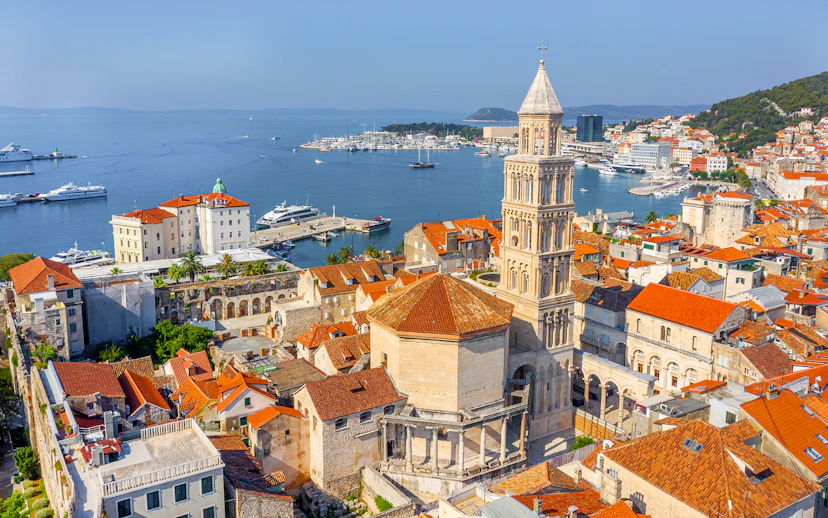
Visiting Diocletian’s Palace in Split, Croatia
Diocletian’s Palace is a 4th-century Roman palace complex best known for turning Split’s Old Town into a walk-through archaeological site. It feels less like one contained monument and more like a maze of gates, courtyards, churches, cafes, and ruins woven into the city. The biggest difference between a magical visit and a frustrating one is timing: hit the Peristyle before the tour groups arrive and the whole place reads differently. This guide covers entrances, timing, tickets, and the smartest route through the palace.
Quick overview: Diocletian’s Palace at a glance
If you only read one section before you go, make it this one.
- When to visit: Monday–Sunday, the palace’s open-air courtyards stay accessible all day, while paid interiors usually operate during daytime hours. Before 8am is noticeably calmer than 10am–2pm in July and August, when city tours and cruise-day crowds build up around the Peristyle.
- Getting in: From €0 for the palace itself, with paid interiors like the cellars and cathedral complex usually from about €8–11; guided tours typically start from about €15–25, and booking 3–7 days ahead matters most in summer.
- How long to allow: 1.5–3 hours works for most visitors, and it pushes toward the longer end if you add the bell tower, cathedral complex, and the substructures.
- What most people miss: The quieter Silver Gate approach and the palace’s substructures add far more atmosphere than many first-timers expect.
- Is a guide worth it? Yes if you want the Roman-to-medieval story to make sense quickly, but a self-guided visit works well if you only want the atmosphere and one or two paid interiors.
🎟️ Tours and timed interior tickets for Diocletian’s Palace are most likely to sell out 3–7 days in advance during July and August. Lock in your visit before the time you want is gone.
Jump to what you need
🕒 Where and when to go
🎟️ Which ticket is right for you?
🗺️ Getting around
🏛️ What to see
♿ Facilities and accessibility
Where and when to go
How do you get to Diocletian’s Palace?
The palace sits in Split’s Old Town by the Riva waterfront, about a 10-minute walk from the ferry port and within easy walking distance of the main bus and train stations.
Diocletian’s Palace, Old Town, 21000 Split, Croatia
- Ferry port: Split ferry port → 10-minute walk → follow the Riva west, then enter from the south side for the easiest approach.
- Bus: Split main bus station → 20-minute walk or short city-bus hop → easiest if you’re arriving overland with light luggage.
- Train: Split train station → 15–20-minute walk → same flat waterfront route as from the ferry port.
- Airport bus: Split Airport shuttle or bus 37 → 40–45 minutes to downtown → get off near the Riva and walk in.
- Taxi/rideshare: Drop-off on the Riva or near Kolodvorska → the final stretch is always on foot through the Old Town edge.
Which entrance should you use?
The palace doesn’t have one formal visitor entrance, which is what catches people out most: the gate that makes sense depends more on where you’re arriving from than on your ticket.
- Golden Gate: Located on the north side. Best for first-time visitors who want the classic processional approach. Expect short crowd bottlenecks around late morning.
- Brass Gate: Located on the south side by the Riva. Best for ferry-port arrivals and direct access toward the substructures. Expect the most foot traffic in summer.
- Silver Gate: Located on the east side near the market. Best for a quieter entry from the bus-station side. Expect lighter congestion than the Golden Gate.
- Iron Gate: Located on the west side. Best for visitors coming from Pjaca and the western Old Town lanes. Expect steady but usually manageable foot traffic.
When is Diocletian’s Palace open?
- Monday–Sunday: Palace squares, streets, and gates are open 24/7
- Monday–Sunday: Substructures and most paid interiors generally open during daytime hours, often around 9am–5pm
- Last entry: Around 4:30pm for the substructures
When is it busiest? July and August, especially 10am–2pm, are the heaviest hours because guided groups, cruise visitors, and midday heat all funnel people into the Peristyle at once.
When should you actually go? Before 8am gives you the emptiest courtyards and best light, then you can move into the paid interiors once they open later in the morning.
Which Diocletian’s Palace ticket is best for you
| Ticket type | What's included | Best for | Price range |
|---|---|---|---|
Palace grounds only | Open-air access to the palace lanes, gates, courtyards, and Peristyle | A flexible visit where you mainly want the UNESCO setting and don’t mind skipping the interiors | From €0 |
Diocletian's Palace and Old Town Guided Tour | 1.5-hour guided walking tour of Split + English-speaking local guide + Diocletian’s Palace, St. Duje Cathedral, and Riva promenade highlights | A first visit where you want Split’s Roman history, Old Town landmarks, and waterfront atmosphere explained through local storytelling | From €15 |
Game of Thrones Tour with Diocletian's Cellar | Guided Game of Thrones walking tour of Split + English-speaking local guide + entry to Diocletian’s Cellars and major filming locations within Diocletian’s Palace | A Split tour where you want real Game of Thrones filming locations, Roman history, and behind-the-scenes stories combined in one walk | From €35 |
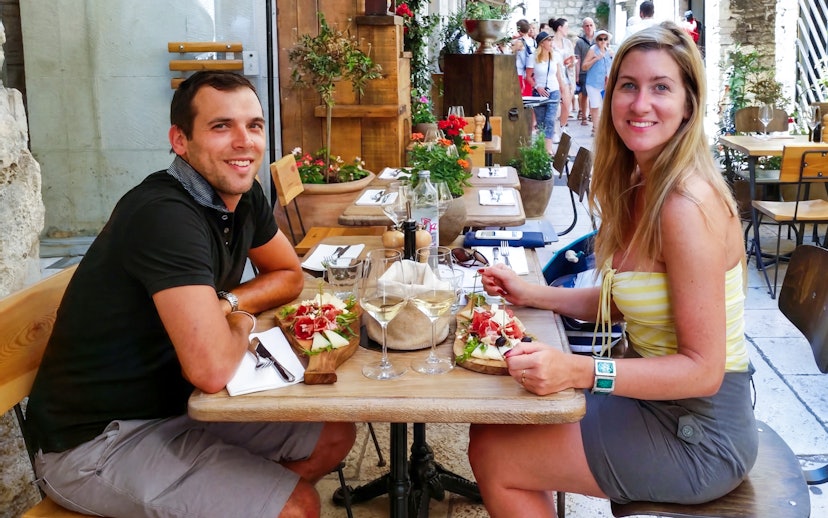
Diocletian's Palace Wine Tasting with Snacks | Dalmatian wine tasting inside Diocletian’s Palace + traditional local snacks + expert presentation of regional wines | A relaxed Old Town experience where you want local wine, Dalmatian flavors, and a more intimate side of Split beyond sightseeing walks | From €45 |
Half-Day Guided Walking Tour of Split & Trogir | Half-day guided tour of Split and Trogir + professional licensed guide + return AC transfers + visits to Diocletian’s Palace and Trogir Old Town | Travelers who want to see both Split and Trogir in one easy trip while exploring Roman history, medieval streets, and UNESCO-listed landmarks with a guide | From €50 |
Private Walking Tour with Diocletian's Palace | 1.5-hour private walking tour of Split + expert English-speaking guide + guided visit through Diocletian’s Palace and historic Old Town landmarks | Visitors short on time who want a focused introduction to Split’s Roman history, major landmarks, and waterfront atmosphere with a private guide | From €120, price varies by group size |
How do you get around Diocletian’s Palace?
Inside the palace
Diocletian’s Palace is best explored on foot, and you can cover the highlights in about 1.5–2 hours or stretch it to 3 hours if you add the paid interiors and bell tower. The Peristyle sits near the palace’s center, with the cathedral just off it, the substructures along the south side, and the main gates leading you in from each edge.
- Peristyle: Ceremonial heart of the palace → best first stop for orientation and photos → plan for 10–15 minutes.
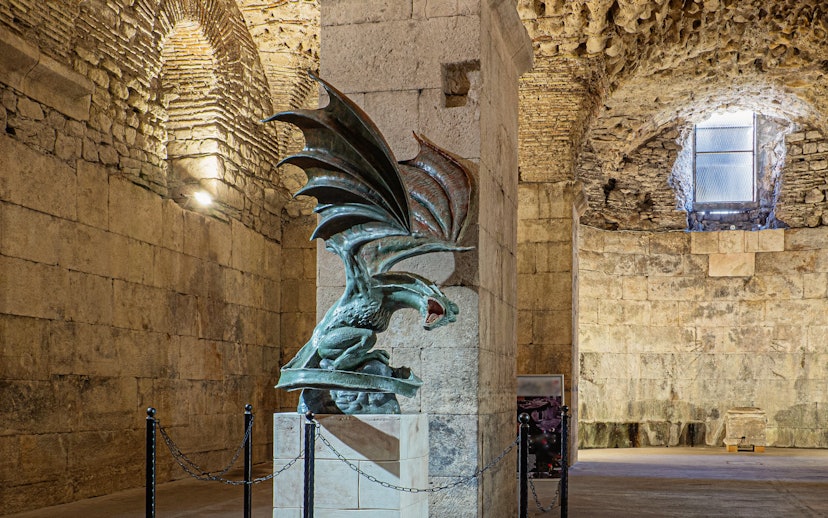
- Substructures: Vaulted Roman cellar halls under the south wing → coolest and most intact indoor space → plan for 15–30 minutes.
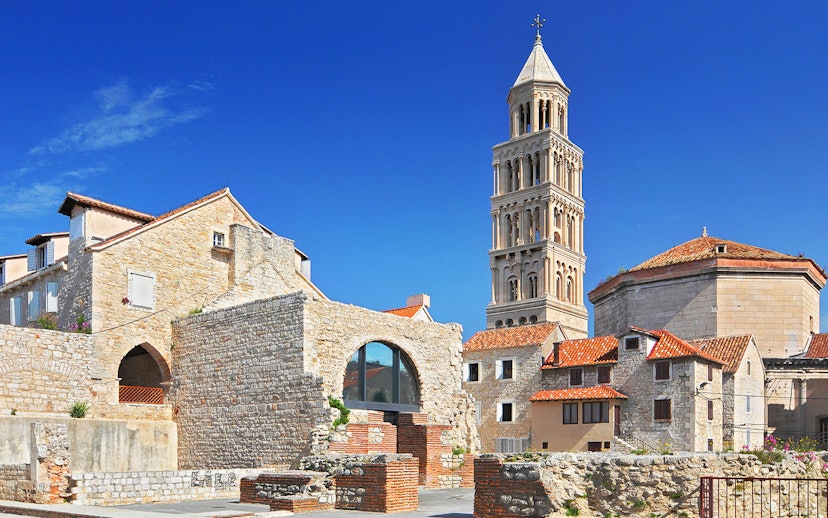
- Cathedral of St. Domnius: Former mausoleum with tower climb → strongest vertical viewpoint and most layered history → plan for 30–45 minutes.
- Temple of Jupiter: Compact Roman temple turned baptistery → easy add-on near the Peristyle → plan for 10–15 minutes.
- Golden and Silver gates: Best way to read the palace as a fortified Roman complex → worth seeing as part of your entry or exit → plan for 10 minutes combined.
Suggested route: Start from the Brass Gate or Golden Gate, orient yourself in the Peristyle, do the substructures before the midday rush, then decide between the cathedral complex or a slower wander through the outer gates and market edge.
Maps and navigation tools
- Map: A downloaded Old Town map works best → it helps you connect the gates, Peristyle, and paid interiors → save it before arrival.
- Signage: Wayfinding is decent for major sights, but the palace blends into the city grid → a map genuinely helps once you leave the Peristyle.
- Audio guide/app: Live guides add more than audio here → the site makes more sense with someone explaining what is Roman, medieval, and modern.
💡 Pro tip: Download your map before you enter the Old Town core. The palace feels intuitive until you leave the Peristyle, then every stone lane starts looking equally convincing.
What can you see from Diocletian’s Palace?

Peristyle
Era: 4th-century Roman ceremonial court
This is the palace’s defining space: a stone courtyard framed by columns, arches, and layered façades from different centuries. It’s where the palace stops feeling like an old neighborhood and starts reading clearly as imperial architecture. Most people photograph the square and move on too quickly; slow down and look at how the Roman columns sit beside later Christian and medieval additions.
Where to find it: In the middle of the palace core, between the cathedral complex and the Temple of Jupiter.
Cathedral of St. Domnius
Type: Former mausoleum turned cathedral
The cathedral matters because it shows the palace’s biggest transformation: an emperor’s mausoleum becoming a Christian church still in use today. The interior is compact, so the experience is less about scale and more about layers of history. What many visitors rush past is the contrast between the solemn interior and the tower climb above it, which changes the whole sense of the site.
Where to find it: Directly off the Peristyle, on the eastern side of the central square.
Bell tower
Type: Viewpoint and historic climb
The bell tower gives you the best overall read of Split, the harbor, and the palace footprint in one glance. It’s worth doing if you want context, not just a city photo. What visitors often underestimate is the climb itself: the stairs are steep, narrow, and not ideal if you dislike tight spaces or low clearance.
Where to find it: Attached to the Cathedral of St. Domnius, accessed through the cathedral complex ticket.
Substructures
Type: Roman cellar halls
These vaulted underground halls are among the palace’s most atmospheric spaces and one of the clearest links to the original Roman layout. They also give you relief from the heat in summer, which matters more here than people expect. Most visitors know them for the Game of Thrones connection, but the real reason to linger is how intact the stone volumes still feel.
Where to find it: Along the palace’s southern side, entered from the waterfront side near the Brass Gate.
Temple of Jupiter
Era: Roman temple later converted into a baptistery
This is one of the palace’s smaller stops, but it rewards attention because the architecture is so refined. The porch, stone carving, and later baptistery use tell the story of how Roman Split was repurposed rather than erased. Many people duck in quickly; spend a moment outside first to appreciate the podium and proportions.
Where to find it: Just off the Peristyle, a short walk from the cathedral and easy to combine with it.
Golden Gate
Type: Main Roman north gate
The Golden Gate is the palace at its most theatrical, especially if you approach it before the crowds build. It helps you understand that this wasn’t just a palace residence, but a fortified imperial complex. What people often miss is the framing effect: looking through it toward the palace interior gives one of the clearest spatial reads of the whole site.
Where to find it: On the north side of the palace, opening toward the Gregory of Nin side of the Old Town.
Facilities and accessibility
- 🍽️ Cafes and bars: Food and drink options are available inside and around the palace lanes rather than in one visitor center, so you can stop often but you’ll pay more in the busiest squares.
- 🛍️ Gift shops/merchandise: Souvenir shops are scattered through the palace alleys, and it’s worth comparing prices because neighboring stores can vary a lot.
- 🪑 Seating/rest areas: The easiest breaks are cafe terraces and the stone edges around the Peristyle, though shade is limited at midday.
- 🚻 Restrooms: Restroom access is easier in nearby cafes and ticketed interiors than in the open palace lanes, so don’t assume you’ll find one exactly when you need it.
- 💧 Water: Bring your own bottle for the open-air part of the visit, especially in summer, because this is a walking-heavy site with long stretches in the sun.
- ♿ Mobility: The open-air palace is partly manageable, but uneven stone, thresholds, and steps make the route slower, and the bell tower is not suitable for wheelchair users.
- 👁️ Visual impairments: A live guide is more useful than site signage here because the palace layout is atmospheric, busy, and not always easy to read independently.
- 🧠 Cognitive and sensory needs: Early morning and late evening are the easiest windows if you want less noise, because the Peristyle gets loudest around guided tours, performances, and peak summer foot traffic.
- 👨👩👧 Families and strollers: Main routes can work with a stroller, but polished stone, tight lanes, and stair-heavy interiors mean the full visit is not smoothly stroller-friendly end to end.
This works best for children who like stories, towers, and scavenger-hunt-style exploring rather than hands-on exhibits.
- 🕐 Time: 1–1.5 hours is realistic with younger children if you focus on the Peristyle, one gate, and either the cellars or the cathedral complex.
- 🏠 Facilities: Breaks are easy because cafés, gelato stops, and open squares are built into the surrounding Old Town.
- 💡 Engagement: Turn the visit into a Roman-spotting game by asking kids to find gates, cellar vaults, sphinxes, and reused carved stone.
- 🎒 Logistics: Bring water, sun protection, and shoes with grip, and skip the bell tower if anyone dislikes tight stairs or heights.
- 📍 After your visit: The Riva promenade is the easiest nearby reset for a snack and room to move.
Rules and restrictions
What you need to know before you go
- Entry requirement: The palace’s open-air core is free to enter, but paid interiors like the cathedral complex and substructures use separate tickets.
- Bag policy: Small day bags are easiest here because the lanes are tight and the bell tower climb is awkward with anything bulky.
- Re-entry policy: You can come and go freely through the palace itself, but paid interiors may require a new queue once you leave.
- Dress note: If you plan to enter the cathedral or baptistery, dress modestly and avoid very short shorts or uncovered shoulders.
Not allowed
- 🚫 Food and drink: Eating and drinking are fine in the public lanes and cafés, but not inside the cathedral, baptistery, or museum-style interiors.
- 🖐️ Touching and climbing: Don’t climb on protected stonework or use the Roman structures like benches or playground equipment, as this is a preserved heritage site still woven into everyday city life.
Photography
Photography is widely allowed in the open-air palace and usually fine in the substructures, but treat the cathedral and baptistery as active religious spaces and follow posted instructions where they apply. The practical distinction is simple: outdoor squares are your easiest photo zones, while consecrated interiors call for more restraint. Tripods and bulky selfie sticks are a poor fit for narrow lanes and steep tower stairs even when the issue is space rather than a formal ban.
Good to know
- The palace itself is free, but the most important interiors are managed separately, so many visitors assume more is included than actually is.
- The bell tower is the least forgiving part of the visit, and tight, steep stairs matter more than the height itself.
- The palace is not one fenced attraction. It functions as Split’s Old Town, so you may enter through one gate and exit through another without noticing you’ve crossed the Roman core.
- The noon guard-style performance adds atmosphere in season, but it also packs the Peristyle, so do your widest-angle photos before or after it.
Practical tips
- Booking and arrival: You don’t need a booking for the free palace lanes, but paid interiors and guided tours are smartest to lock in 3–7 days ahead in July and August, especially if you want a morning slot.
- Pacing: Do the Peristyle and main gates first, then the substructures, and save the bell tower for last so the steep climb doesn’t set the pace for the rest of your visit.
- Crowd management: Before 8am is the best palace-only window because the stone lanes are still quiet, the light is softer, and the Peristyle hasn’t filled with walking groups yet.
- What to bring or leave behind: Wear shoes with grip rather than smooth soles, because polished stone and old steps matter more here than distance does.
- Food and drink: Eat either before 12 noon or after 2pm if you want a calmer meal nearby, because the lunch rush outside the palace rises at the same time the central square gets busiest.
What else is worth visiting nearby?
Commonly paired
Riva promenade
Distance: 300 m, a 5-minute walk
Why people combine them: The palace opens naturally onto the waterfront, so this is the easiest same-day pairing for a coffee, sea view, or decompression walk after the stone lanes.
Commonly paired
Marjan Hill viewpoint
Distance: About 2 km, 10–15 minutes by taxi or 25–30 minutes on foot to the lower slopes
Why people combine them: The palace gives you Split’s deepest history, while Marjan gives you the city’s best wider view, so the two work well as one urban day.
Also nearby
Split Fish Market
Distance: 250 m, a 4-minute walk
Worth knowing: This is the quickest nearby break from pure sightseeing and one of the easiest places to see everyday Split life still moving around the Roman core.
Trogir Old Town
Distance: About 27 km, a 30-minute drive
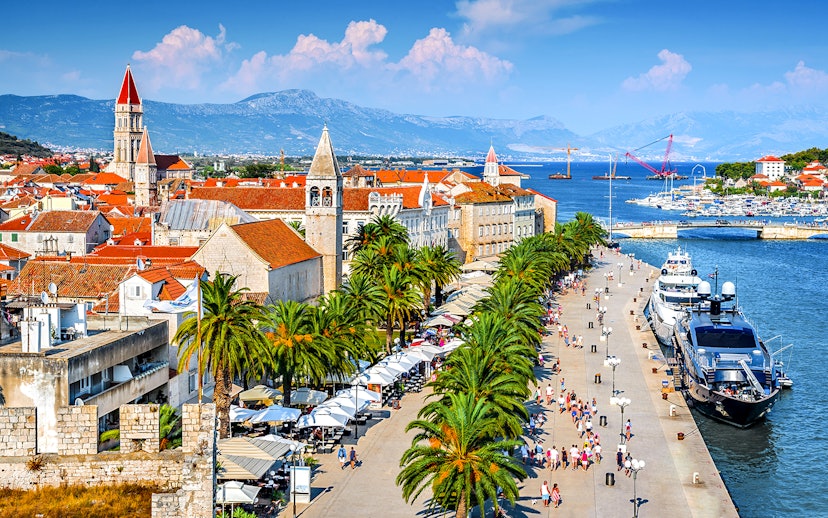
Worth knowing: If you still want stone lanes and UNESCO atmosphere after Split, Trogir is the cleanest half-day extension.
Eat, shop and stay near Diocletian’s Palace
- On-site: Cafes and wine bars inside the palace lanes are convenient for a drink or light meal, but you’re usually paying for location more than value.
- Riva promenade cafes: (5-minute walk, waterfront south of the palace) Best for a relaxed coffee or seafood stop once you’ve finished the main sights.
- Fish Market area eateries: (4-minute walk, market-side west/east edge) Better if you want something quicker and more local-feeling than the busiest Peristyle terraces.
- Old Town konobas near Pjaca: (5–8-minute walk, west of the palace core) Best for a proper Dalmatian sit-down meal once you’re away from the densest crowd pockets.
- 💡 Pro tip: Eat before 12 noon or after 2pm in summer as the same midday rush that fills the Peristyle spills straight into the nearest restaurants.
- Palace alley souvenir shops: Roman-themed gifts, lavender products, and olive-wood souvenirs are easy to find, but compare prices before buying because they vary sharply within a few minutes’ walk.
- Split market area: Olive oil, cheese, figs, and pantry gifts are a better buy near the market edge if you want something more local than standard palace souvenirs.
- Riva-side kiosks and specialty stores: Useful for last-minute gifts if you’d rather shop after your visit than carry purchases through the stone lanes.
Yes for a short stay, especially if walking access matters to you. The big advantage is convenience: you can be inside the palace before the crowds build and still be close to the ferry port, waterfront, and restaurants. The trade-off is that this is one of Split’s busiest and most tourist-facing areas, so quiet evenings and better-value hotels usually sit a little farther out.
- Price point: This area skews mid-range to expensive, with the biggest premium on rooms inside or directly beside the Old Town core.
- Best for: Travelers on a short trip, cruise extensions, and anyone who wants to walk to the palace at dawn without dealing with transport.
- Consider instead: Stay slightly outside the Old Town or closer to quieter residential parts of Split if you want better value, easier sleep, or a longer base with less foot traffic.
Frequently asked questions about visiting Diocletian’s Palace
Most visits take 1.5–3 hours. If you’re only wandering the open-air palace and stopping at the Peristyle, you can be done in under 90 minutes, but adding the substructures, cathedral complex, and bell tower pushes the visit closer to 3 hours.
You don’t need a booking to enter the palace itself, because the open-air complex is free. You should book guided tours and paid interiors ahead in summer, especially if you want a morning visit or are traveling in July and August, when the strongest slots fill first.
Arrive about 10–15 minutes early for any paid interior or guided tour. That gives you enough time to find the right gate or meeting point in the Old Town maze without turning a simple late arrival into a rushed start.
Yes, a small backpack or day bag is usually manageable. A bulky bag becomes annoying fast because the palace lanes are narrow, the stone paving is uneven, and the bell tower climb is awkward with anything larger than a light day pack.
Yes, photography is one of the easiest parts of the visit in the open-air palace. Be more restrained inside the cathedral and baptistery, where the space is still religious in character, and follow any posted no-flash or staff instructions in the paid interiors.
Yes, group visits are common here. The palace handles groups well in the open-air areas, but the experience is much better if your group keeps moving because the Peristyle, tower access, and narrow lanes clog quickly in peak summer hours.
Yes, if your children enjoy exploring rather than needing a museum built around kids. The open layout, gates, and underground halls keep the visit visually interesting, but younger children may lose patience if you try to do every paid interior in one go.
It is only partly accessible. The open-air core can work in sections, but uneven stone, thresholds, and steps make parts of the route slower, and the bell tower is not accessible at all.
Yes, and that’s one of the easiest logistics here. The palace sits inside Split’s Old Town, so cafés, bars, and restaurants surround you before, during, and after the visit, with the Riva and market area offering the best quick options nearby.
The palace streets, gates, and main squares are free to enter. The substructures, cathedral complex, baptistery, treasury, crypt, and bell tower usually require separate paid admission or a combined site ticket.
There is no dress code for walking through the open-air palace. If you’re entering the cathedral or baptistery, dress modestly and avoid uncovered shoulders or very short shorts, because these are still religious spaces.
The bell tower climb is short but physically demanding. The steps are steep, narrow, and enclosed in places, so it’s rewarding for the view but not a good idea if you’re claustrophobic, unsteady on stairs, or visiting with very young children.